A Siamese Cat Makes a Purr-fect Pet
For hundreds of years the Siamese cat has been in existence, making it one of the oldest established cat breeds. Even though the precise origins of these cats are in dispute, it is generally suggested that they stem from the area of Southeast Asia. A plausible speculation is that they are distant descendents of the King of Siam's revered palace cats. In the late 1800's the first pair of Siamese cats was transported from Siam (now called Thailand) to Britain. Since then, their popularity has increased so much that they are one of today's most admired cat breeds.
There are two very distinct varieties of Siamese cats. The first one is the Traditional or Apple-head type. These cats have a circular head with proportionate rounded ears. Their eyes are also more rounded. They are normal-sized cats with stockier athletic bodies. This type maintains the original characteristics of the early imports from Siam.
The second variety is the Modern or Wedge-head Siamese. In comparison, they have elongated wedge or triangular heads with obviously large pointed ears. Their eyes are almond shaped and somewhat slanted. Their agile bodies are long, slim and graceful with whip-like tails. This type was refined by breeders and is the kind you will see competing in cat shows.
In the past, Siamese cats had unusual traits, such as, kinked tails and crossed eyes. While these tendencies can still be found in the Siamese, they are considered flaws and through breeders using discriminating breeding practices, occur much less frequently. All Siamese cats are shorthaired and have brilliant blue eyes, except for albinos.
Siamese cats are recognized for their point color pattern. Which means the body coat is lighter in color, while the points are darker. The points are the cat's face, ears, lower legs, paws and tail. Siamese kittens are born entirely white. Slowly but surely, the color points begin to appear and improve until one year of age when most color points are totally developed. Siamese come in four basic color points. The first is the well-known Seal Point. The body color is fawn with dark brown points. Next is the Chocolate Point. As the name suggests, the points are a chocolate color and the body is off-white. After that, comes the Blue Point, which has a white body color with a bluish tint. Its points are a deep bluish-gray. Finally is the scarce Lilac Point that has a white body and pinky gray points. Besides these basic colors, there are many variations. They include an assortment of other color points, torties, lynxes and albinos.
Along with a curious nature, Siamese are regarded as extremely intelligent being a social animal that is very loyal and loving to their people. They can form a strong bond with their owner. In fact, they require a fair amount of attention from their humans or they may become lonely if not given their proper affection. If that becomes the case, the owner may hear what these cats are famous for which is their ability to communicate vocally that at times can be considerably loud. In fact, it can sound as if the cat is hurt and in pain.
It is very easy to care for a Siamese cat, since they are able to groom themselves. However, it certainly will appreciate an occasional brushing. Generally, it is a healthy breed, although there are a few genetic diseases as with most purebreds. By keeping inoculations up-to-date, spaying or neutering and not allowing the cat outdoors, you can have an enduring friendship. This cat is tolerant of smaller children and its calm temperament is perfect for seniors making it a terrific all-around family pet.
Friday, March 23, 2007

Monday, March 12, 2007
A Siamese Cat Makes a Purr-fect Pet
For hundreds of years the Siamese cat has been in existence, making it one of the oldest established cat breeds. Even though the precise origins of these cats are in dispute, it is generally suggested that they stem from the area of Southeast Asia. A plausible speculation is that they are distant descendents of the King of Siam's revered palace cats. In the late 1800's the first pair of Siamese cats were transported from Siam (now called Thailand) to Britain. Since then, their popularity has increased so much that they are one of today's most admired cat breeds.
There are two very distinct varieties of Siamese cats. The first one is the Traditional or Applehead type. These cats have a circular head with proportionate rounded ears. Their eyes are also more rounded. They are normal-sized cats with stockier athletic bodies. This type maintains the original characteristics of the early imports from Siam.
The second variety is the Modern or Wedgehead Siamese. In comparison, they have elongated wedge or triangular heads with obviously large pointed ears. Their eyes are almond shaped and somewhat slanted. Their agile bodies are long, slim and graceful with whip-like tails. This type was refined by breeders and is the kind you will see competing in cat shows.
In the past, Siamese cats had unusual traits, such as, kinked tails and crossed eyes. While these tendencies can still be found in the Siamese, they are considered flaws and through breeders using discriminating breeding practices, occur much less frequently. All Siamese cats are shorthaired and have brilliant blue eyes, except for albinos.
Siamese cats are recognized for their point color pattern. Which means the body coat is lighter in color, while the points are darker. The points are the cat's face, ears, lower legs, paws and tail. Siamese kittens are born entirely white. Slowly but surely, the color points begin to appear and improve until one year of age when most color points are totally developed. Siamese come in four basic color points. The first is the well-known Seal Point. The body color is fawn with dark brown points. Next is the Chocolate Point. As the name suggests, the points are a chocolate color and the body is off-white. After that, comes the Blue Point, which has a white body color with a bluish tint. Its points are a deep bluish-gray. Finally is the scarce Lilac Point that has a white body and pinky gray points. Besides these basic colors, there are many variations. They include an assortment of other color points, torties, lynxes and albinos.
Along with a curious nature, Siamese are regarded as extremely intelligent being a social animal that is very loyal and loving to their people. They can form a strong bond with their owner. In fact, they require a fair amount of attention from their humans or they may become lonely if not given their proper affection. If that becomes the case, the owner may hear what these cats are famous for which is their ability to communicate vocally that at times can be considerably loud. In fact, it can sound as if the cat is hurt and in pain.
It is very easy to care for a Siamese cat, since they are able to groom themselves. However, it certainly will appreciate an occasional brushing. Generally, it is a healthy breed, although there are a few genetic diseases as with most purebreds. By keeping inoculations up-to-date, spaying or neutering and not allowing the cat outdoors, you can have an enduring friendship. This cat is tolerant of smaller children and its calm temperament is perfect for seniors making it a terrific all-around family pet.
There are two very distinct varieties of Siamese cats. The first one is the Traditional or Applehead type. These cats have a circular head with proportionate rounded ears. Their eyes are also more rounded. They are normal-sized cats with stockier athletic bodies. This type maintains the original characteristics of the early imports from Siam.
The second variety is the Modern or Wedgehead Siamese. In comparison, they have elongated wedge or triangular heads with obviously large pointed ears. Their eyes are almond shaped and somewhat slanted. Their agile bodies are long, slim and graceful with whip-like tails. This type was refined by breeders and is the kind you will see competing in cat shows.
In the past, Siamese cats had unusual traits, such as, kinked tails and crossed eyes. While these tendencies can still be found in the Siamese, they are considered flaws and through breeders using discriminating breeding practices, occur much less frequently. All Siamese cats are shorthaired and have brilliant blue eyes, except for albinos.
Siamese cats are recognized for their point color pattern. Which means the body coat is lighter in color, while the points are darker. The points are the cat's face, ears, lower legs, paws and tail. Siamese kittens are born entirely white. Slowly but surely, the color points begin to appear and improve until one year of age when most color points are totally developed. Siamese come in four basic color points. The first is the well-known Seal Point. The body color is fawn with dark brown points. Next is the Chocolate Point. As the name suggests, the points are a chocolate color and the body is off-white. After that, comes the Blue Point, which has a white body color with a bluish tint. Its points are a deep bluish-gray. Finally is the scarce Lilac Point that has a white body and pinky gray points. Besides these basic colors, there are many variations. They include an assortment of other color points, torties, lynxes and albinos.
Along with a curious nature, Siamese are regarded as extremely intelligent being a social animal that is very loyal and loving to their people. They can form a strong bond with their owner. In fact, they require a fair amount of attention from their humans or they may become lonely if not given their proper affection. If that becomes the case, the owner may hear what these cats are famous for which is their ability to communicate vocally that at times can be considerably loud. In fact, it can sound as if the cat is hurt and in pain.
It is very easy to care for a Siamese cat, since they are able to groom themselves. However, it certainly will appreciate an occasional brushing. Generally, it is a healthy breed, although there are a few genetic diseases as with most purebreds. By keeping inoculations up-to-date, spaying or neutering and not allowing the cat outdoors, you can have an enduring friendship. This cat is tolerant of smaller children and its calm temperament is perfect for seniors making it a terrific all-around family pet.
Thursday, March 8, 2007
A Method of Bathing Your Dog
Some dogs like the Poodle can have a lot of their thick coat clipped before a bath. However, clipping dirty hair puts more wear on clipper blades. You will need to use lubricating spray and oil on clipper blades to keep them in top condition. If you clip the thick hair of some dog breeds before bathing you will cut down washing and drying time by about half. You will use less electricity, less time and less stress for the dog.
Essential equipment for bath time is of course a high quality shampoo that lathers quickly and rinses out quickly. Another essential for the bath time is a long, secure rubber mat to prevent the dog from slipping. You definitely need a decent hose spray to distribute the water evenly throughout your dog's coat.
Never leave your dog unattended on a grooming table or in the bathtub.
Wet the dog thoroughly before applying shampoo. Lift long hair to be certain you get down to the roots. Be sure the water drains away as it runs off the dog. You do not want your dog standing in dirty water. Temperature of water should be warm, never hot or cold. Put some cotton in the dog's ears to prevent water getting into them. Water in the ears from bathing can cause ear infections.
Start with the head and wet down the neck, along the back and down the left side including the legs. Repeat on the right side. Avoid turning the dog at this stage. Turning the dog at this stage will encourage the dog to jump out. Wet the tail last.
If the dog is sensitive about having its head wet, start with the tail and work up the body, wetting the head last.
Work the shampoo through the coat with your hands. To help distribute the shampoo and prevent it from affecting the skin, I recommend diluting your shampoo with a little water before applying.
Work the shampoo into the coat thoroughly. Do not overlook the area underneath the chest and stomach, the anal area and the dog's feet (especially on the bottom of the feet). Be sure the shampoo gets down to the skin and is well lathered. Add water if needed.
Always use a tearless shampoo for the head and face. You still need to be careful not to get shampoo in the dog's eyes. Rinse immediately if the shampoo gets into the dog's eyes. Do not put shampoo in the dog's ears. I like to use Betadine Scrub (you can get this from your vet) inside the ears each bath. Just pour a little straight from the bottle into the dog’s ears each bath. This helps to avoid yeast and fungus ear infections. Keep the hair pulled out of your dog's ears.
Rinse off the shampoo and use a second application if required. If your dog's coat is clean - it will "squeak" as human hair does. Clean your dog's coat until you hear the "squeak." Rinsing should be very thorough. Any shampoo left in the coat can cause intense itching. If your dog has very sensitive skin, use a very mild, natural-ingredient shampoo. If you notice itching right after your dog's bath, discontinue that brand of shampoo and try another brand.
You can use a hound glove when in the bath to remove dead and molting hair from a short-coated dog.
When you are finished rinsing your dog's coat, squeeze out the excess moisture with cotton towels or super absorbent towels to cut down on drying time.
Most breeds of dogs need to be blow dried after a bath. Use a low temperature on your hair dryer. Be careful not to have the air blow directly onto the skin. Blow the hair away from the skin, but do not blow the skin itself. Most dogs hate the blower on their faces. If you keep your blow dryer turned on low they do not object so much.
Essential equipment for bath time is of course a high quality shampoo that lathers quickly and rinses out quickly. Another essential for the bath time is a long, secure rubber mat to prevent the dog from slipping. You definitely need a decent hose spray to distribute the water evenly throughout your dog's coat.
Never leave your dog unattended on a grooming table or in the bathtub.
Wet the dog thoroughly before applying shampoo. Lift long hair to be certain you get down to the roots. Be sure the water drains away as it runs off the dog. You do not want your dog standing in dirty water. Temperature of water should be warm, never hot or cold. Put some cotton in the dog's ears to prevent water getting into them. Water in the ears from bathing can cause ear infections.
Start with the head and wet down the neck, along the back and down the left side including the legs. Repeat on the right side. Avoid turning the dog at this stage. Turning the dog at this stage will encourage the dog to jump out. Wet the tail last.
If the dog is sensitive about having its head wet, start with the tail and work up the body, wetting the head last.
Work the shampoo through the coat with your hands. To help distribute the shampoo and prevent it from affecting the skin, I recommend diluting your shampoo with a little water before applying.
Work the shampoo into the coat thoroughly. Do not overlook the area underneath the chest and stomach, the anal area and the dog's feet (especially on the bottom of the feet). Be sure the shampoo gets down to the skin and is well lathered. Add water if needed.
Always use a tearless shampoo for the head and face. You still need to be careful not to get shampoo in the dog's eyes. Rinse immediately if the shampoo gets into the dog's eyes. Do not put shampoo in the dog's ears. I like to use Betadine Scrub (you can get this from your vet) inside the ears each bath. Just pour a little straight from the bottle into the dog’s ears each bath. This helps to avoid yeast and fungus ear infections. Keep the hair pulled out of your dog's ears.
Rinse off the shampoo and use a second application if required. If your dog's coat is clean - it will "squeak" as human hair does. Clean your dog's coat until you hear the "squeak." Rinsing should be very thorough. Any shampoo left in the coat can cause intense itching. If your dog has very sensitive skin, use a very mild, natural-ingredient shampoo. If you notice itching right after your dog's bath, discontinue that brand of shampoo and try another brand.
You can use a hound glove when in the bath to remove dead and molting hair from a short-coated dog.
When you are finished rinsing your dog's coat, squeeze out the excess moisture with cotton towels or super absorbent towels to cut down on drying time.
Most breeds of dogs need to be blow dried after a bath. Use a low temperature on your hair dryer. Be careful not to have the air blow directly onto the skin. Blow the hair away from the skin, but do not blow the skin itself. Most dogs hate the blower on their faces. If you keep your blow dryer turned on low they do not object so much.
Monday, February 26, 2007
Tips for buy your first puppy
5 Things You Need to Know Before You Buy Your First Puppy
Your kids want a puppy. All your neighbors have dogs. It’s the great American Dream (for children, anyway) to have a dog like Lassie. However, if this is your first puppy, there are some things you need to know before you commit to buying a dog.
#1 - Dogs Take Time. Puppies Take More Time.
Having a puppy is like having a 2-year-old. Until they are trained (see #2), they require pretty much constant supervision. After they are trained, they still require supervision until they are older. If you can't entertain them all day, you may want to consider two dogs, or a cat. Or puppy day care!
#2 - Puppies Need Training. And so do your children.
When I was growing up, we had a dog - for a while. It didn't work out because my parents didn't realize that puppies need training. We were a cat family - and you can pretty much ignore cats. Not so with dogs.
You will need several puppy classes and possibly more classes when your puppy is grown. Dogs are not independent, and you need to teach them proper behavior.
If you have children, they need to take the classes with their puppies so they can learn how to interact with your new pet.
#3: Puppies Cost Money.
Ok - this isn't unreasonable, but you need to be prepared to add your puppy into your budget. You will have many expenses, especially when you first get your new puppy. They need toys, bones, shots, registrations with the state, and don't forget the food, doghouses, collars, clothes (no really - it’s a big business - you'll be tempted!) vet bills, and training (see #2).
Dogs are one of the most expensive pets around. Most puppies are part of the family - and will cost you like part of the family. Don't go into this venture thinking they're cheap.
#4 - Puppies Grow Into Dogs.
I know that's obvious - but you need to be sure you know how big your dog will be. If you have young children, your puppy may outweigh them within a year. Do the research so you know how big your cute little puppy will be when he's a dog.
If your pet is a mixed breed dog, look at the paws. Usually, a puppy will grow into their paws.
#5 - Dogs Need Exercise.
And people need exercise - so this can actually be an advantage if handled properly. Puppies need room to run and play. They need people to play with, and they need toys to play with. If you lead a very sedentary lifestyle, be sure you pick a dog breed that is low activity.
The larger the dog, the more room and exercise they need. You will probably need to walk your dog several times a week. Be sure and plan that into your schedule now - or you may find your puppy running around the house all day without you.
Owning a dog can be a very rewarding experience - even if this is your first puppy. Your dog will become one of the family and be a faithful companion for life. Be prepared for your new puppy, and it will be a great adventure for both of you.
Your kids want a puppy. All your neighbors have dogs. It’s the great American Dream (for children, anyway) to have a dog like Lassie. However, if this is your first puppy, there are some things you need to know before you commit to buying a dog.
#1 - Dogs Take Time. Puppies Take More Time.
Having a puppy is like having a 2-year-old. Until they are trained (see #2), they require pretty much constant supervision. After they are trained, they still require supervision until they are older. If you can't entertain them all day, you may want to consider two dogs, or a cat. Or puppy day care!
#2 - Puppies Need Training. And so do your children.
When I was growing up, we had a dog - for a while. It didn't work out because my parents didn't realize that puppies need training. We were a cat family - and you can pretty much ignore cats. Not so with dogs.
You will need several puppy classes and possibly more classes when your puppy is grown. Dogs are not independent, and you need to teach them proper behavior.
If you have children, they need to take the classes with their puppies so they can learn how to interact with your new pet.
#3: Puppies Cost Money.
Ok - this isn't unreasonable, but you need to be prepared to add your puppy into your budget. You will have many expenses, especially when you first get your new puppy. They need toys, bones, shots, registrations with the state, and don't forget the food, doghouses, collars, clothes (no really - it’s a big business - you'll be tempted!) vet bills, and training (see #2).
Dogs are one of the most expensive pets around. Most puppies are part of the family - and will cost you like part of the family. Don't go into this venture thinking they're cheap.
#4 - Puppies Grow Into Dogs.
I know that's obvious - but you need to be sure you know how big your dog will be. If you have young children, your puppy may outweigh them within a year. Do the research so you know how big your cute little puppy will be when he's a dog.
If your pet is a mixed breed dog, look at the paws. Usually, a puppy will grow into their paws.
#5 - Dogs Need Exercise.
And people need exercise - so this can actually be an advantage if handled properly. Puppies need room to run and play. They need people to play with, and they need toys to play with. If you lead a very sedentary lifestyle, be sure you pick a dog breed that is low activity.
The larger the dog, the more room and exercise they need. You will probably need to walk your dog several times a week. Be sure and plan that into your schedule now - or you may find your puppy running around the house all day without you.
Owning a dog can be a very rewarding experience - even if this is your first puppy. Your dog will become one of the family and be a faithful companion for life. Be prepared for your new puppy, and it will be a great adventure for both of you.
Wednesday, December 6, 2006
Perfect Dog Sitter
10 Steps to Finding the Perfect Dog Sitter
The flights are reserved, the bags packed and the kids are finally ready! But just as you’re rushing out the door, you run into Fido with those big, sad puppy eyes. Oh NO, what about Fido?
When planning vacation and holiday getaways, our pets are often a forgotten, last-minute detail.
Next time, consider using a pet sitter. It allows your dog to stay in the comfort of their home and maintain their normal routine. These are things even well-meaning friends or family, and certainly kennels, cannot offer. Also, having a trusted pet sitter in your home can help protect your home from intruders.
But how do you find the perfect pet sitter? Start looking before your next trip and follow these 10 recommendations:
1. Personal Referrals. Ask trusted friends or family members if they can recommend a pet sitter they have used. Word-of-mouth is often the best reference.
2. The Interview. Set up a meeting in your home with each potential pet sitter. Watch how the sitter relates or interacts with your dog. Are they actively involved with the dog or are they distant or restrained around them? Does your dog want the pet sitter’s attention? Don’t second-guess your dog’s reaction (or your own); if they don’t seem engaged, move on.
3. Questions, Questions. The kind and volume of questions pet sitters ask will showcase their actual experience in caring for your particular breed of dog. A professional sitter will take notes; you should too. If they don’t ask questions, cross them off your list!
4. Affiliations. Judging solely by an organization affiliation (such as PSI – Pet Sitters International or NAPPS - National Association of Professional Pet Sitters) is tempting. However, remember these national organizations do not know these individuals or their reputation. Instead, ask for local affiliations and follow-up.
5. Client References. Ask for other client references. These will help you get a clearer idea of what to expect if you hire this person.
6. Bonding & Insurance. Bonding and insurance protects you in the case of damage or theft of your property. However, is does NOT ensure that the pet sitter is reliable, caring or trustworthy.
7. The Dotted Line. Ask for a copy of their contract and carefully review the details later. A contract will protect you and your dog. It will also spell out exactly what you can and cannot expect from the pet sitter. It should also list the appropriate rates for all services offered. Do not hesitate to ask questions!
8. Arrange another visit. Arrange for the pet sitter to spend some alone time with your dog. A walk is a great idea. Monitor your dog’s reaction; is he happy and comfortable with the pet sitter? Or does he seem eager to get away from them? This also gives the pet sitter a chance to see if they can appropriately handle your dog (particularly if the dog is a large-breed, strong or very energetic).
9. Listen to your gut! Finally, go with your gut feeling! If it doesn’t “feel” right, it’s not! Keep looking.
10. Before you leave. Leave detailed instructions (prepared earlier), phone number(s) in the event of an emergency, and your vet’s name and number.
Investing your time in advance and following these steps will ensure the best possible pet sitting experience. So the next time you’re making those early travel plans, remember to put Fido, and his pet sitter, on your checklist to avoid those big, sad puppy eyes!
The flights are reserved, the bags packed and the kids are finally ready! But just as you’re rushing out the door, you run into Fido with those big, sad puppy eyes. Oh NO, what about Fido?
When planning vacation and holiday getaways, our pets are often a forgotten, last-minute detail.
Next time, consider using a pet sitter. It allows your dog to stay in the comfort of their home and maintain their normal routine. These are things even well-meaning friends or family, and certainly kennels, cannot offer. Also, having a trusted pet sitter in your home can help protect your home from intruders.
But how do you find the perfect pet sitter? Start looking before your next trip and follow these 10 recommendations:
1. Personal Referrals. Ask trusted friends or family members if they can recommend a pet sitter they have used. Word-of-mouth is often the best reference.
2. The Interview. Set up a meeting in your home with each potential pet sitter. Watch how the sitter relates or interacts with your dog. Are they actively involved with the dog or are they distant or restrained around them? Does your dog want the pet sitter’s attention? Don’t second-guess your dog’s reaction (or your own); if they don’t seem engaged, move on.
3. Questions, Questions. The kind and volume of questions pet sitters ask will showcase their actual experience in caring for your particular breed of dog. A professional sitter will take notes; you should too. If they don’t ask questions, cross them off your list!
4. Affiliations. Judging solely by an organization affiliation (such as PSI – Pet Sitters International or NAPPS - National Association of Professional Pet Sitters) is tempting. However, remember these national organizations do not know these individuals or their reputation. Instead, ask for local affiliations and follow-up.
5. Client References. Ask for other client references. These will help you get a clearer idea of what to expect if you hire this person.
6. Bonding & Insurance. Bonding and insurance protects you in the case of damage or theft of your property. However, is does NOT ensure that the pet sitter is reliable, caring or trustworthy.
7. The Dotted Line. Ask for a copy of their contract and carefully review the details later. A contract will protect you and your dog. It will also spell out exactly what you can and cannot expect from the pet sitter. It should also list the appropriate rates for all services offered. Do not hesitate to ask questions!
8. Arrange another visit. Arrange for the pet sitter to spend some alone time with your dog. A walk is a great idea. Monitor your dog’s reaction; is he happy and comfortable with the pet sitter? Or does he seem eager to get away from them? This also gives the pet sitter a chance to see if they can appropriately handle your dog (particularly if the dog is a large-breed, strong or very energetic).
9. Listen to your gut! Finally, go with your gut feeling! If it doesn’t “feel” right, it’s not! Keep looking.
10. Before you leave. Leave detailed instructions (prepared earlier), phone number(s) in the event of an emergency, and your vet’s name and number.
Investing your time in advance and following these steps will ensure the best possible pet sitting experience. So the next time you’re making those early travel plans, remember to put Fido, and his pet sitter, on your checklist to avoid those big, sad puppy eyes!
Tuesday, November 21, 2006
About Dog's Eyes
Through the "Eyes" of Your Dog!
Unless you were born blind you already know how valuable your eyes and vision are in coping with life. Helping us to process information on the world around us, our eyes constantly work to help us enjoy life and avoid danger.
Dogs also use their eyes in similar ways but with a few minor important differences. We see far and near fine detail in a wide range of colors and shades. Dogs however, even sight hounds which have good vision, have a poorer color range and they are much better at detecting movement rather than detail. This gives them an advantage with night vision but they are poorer at seeing fine or close detail. The main advantage dogs have is that they don't have to rely purely on vision for information on their world. An acute sense of smell and excellent hearing, along with good motion sensing vision, mean that dogs sense much more of their surrounds than mere humans. This extended sensory ability made them ideal companions to early man when danger lurked around every corner.
Dog’s eyes even look remarkably similar to human eyes. Like us, dogs have a range of eye colors although their predominant color is brown. One important difference between us is that dogs have a third eyelid called a nictitating membrane. Although this membrane is not easily seen, certain diseases and eye irritation can make it stand out. The third eyelid sits in the inside corner of a dogs eye and helps to protect it from irritation by cleansing and lubricating the eye.
Most of the eye diseases and problems seen in dogs are the same as those found in humans. One of the most common problems seen in dogs is due to simple eye irritation. The same environmental irritants that afflict us afflict our dogs. Dust, smoke and chemical pollution are the commonest cause of watery irritable eyes in our favorite pets. Apart from seeing red, teary eyes which are often swollen, you will likely observe your dog rubbing or scratching at their eyes. Look carefully at whether both or only one eye is irritated. Symptoms occurring in only one eye usually mean a foreign body or injury in the eye involved.
Blocked tear ducts can also produce excessively watery eyes in dogs as well as humans. In some dog breeds, such as older Poodles and Shih Tzu's, you will often see damp matted fur around their eyes that signals tear duct blockages. An expert opinion from a vet is often needed to tell the difference between the different causes of watery eyes.
Another trait that elderly dogs share with elderly humans is the development of cataracts. Most long-term dog owners have seen the cloudy milky haze that spreads in the center of each pupil as the cataracts form. This milky haze is the lens inside your dog’s eye becoming opaque and the dog slowly becomes blind. It's important to distinguish cataract from another change called Lenticular Sclerosis. Lenticular Sclerosis is a condition which looks similar to cataract but where the only the center of the dogs lens hardens and vision remains unaffected. Both problems are seen in elderly dogs.
One significant advantage that aging dogs have compared to humans is that eye damage and blindness does not incapacitate them to the same extent as human blindness. Good hearing and an acute sense of smell compensate well. There are many stories told of blind dogs managing wonderfully well in life and it's a pity we aging humans are unable to see through the "eyes" of our beloved dogs at times!
Unless you were born blind you already know how valuable your eyes and vision are in coping with life. Helping us to process information on the world around us, our eyes constantly work to help us enjoy life and avoid danger.
Dogs also use their eyes in similar ways but with a few minor important differences. We see far and near fine detail in a wide range of colors and shades. Dogs however, even sight hounds which have good vision, have a poorer color range and they are much better at detecting movement rather than detail. This gives them an advantage with night vision but they are poorer at seeing fine or close detail. The main advantage dogs have is that they don't have to rely purely on vision for information on their world. An acute sense of smell and excellent hearing, along with good motion sensing vision, mean that dogs sense much more of their surrounds than mere humans. This extended sensory ability made them ideal companions to early man when danger lurked around every corner.
Dog’s eyes even look remarkably similar to human eyes. Like us, dogs have a range of eye colors although their predominant color is brown. One important difference between us is that dogs have a third eyelid called a nictitating membrane. Although this membrane is not easily seen, certain diseases and eye irritation can make it stand out. The third eyelid sits in the inside corner of a dogs eye and helps to protect it from irritation by cleansing and lubricating the eye.
Most of the eye diseases and problems seen in dogs are the same as those found in humans. One of the most common problems seen in dogs is due to simple eye irritation. The same environmental irritants that afflict us afflict our dogs. Dust, smoke and chemical pollution are the commonest cause of watery irritable eyes in our favorite pets. Apart from seeing red, teary eyes which are often swollen, you will likely observe your dog rubbing or scratching at their eyes. Look carefully at whether both or only one eye is irritated. Symptoms occurring in only one eye usually mean a foreign body or injury in the eye involved.
Blocked tear ducts can also produce excessively watery eyes in dogs as well as humans. In some dog breeds, such as older Poodles and Shih Tzu's, you will often see damp matted fur around their eyes that signals tear duct blockages. An expert opinion from a vet is often needed to tell the difference between the different causes of watery eyes.
Another trait that elderly dogs share with elderly humans is the development of cataracts. Most long-term dog owners have seen the cloudy milky haze that spreads in the center of each pupil as the cataracts form. This milky haze is the lens inside your dog’s eye becoming opaque and the dog slowly becomes blind. It's important to distinguish cataract from another change called Lenticular Sclerosis. Lenticular Sclerosis is a condition which looks similar to cataract but where the only the center of the dogs lens hardens and vision remains unaffected. Both problems are seen in elderly dogs.
One significant advantage that aging dogs have compared to humans is that eye damage and blindness does not incapacitate them to the same extent as human blindness. Good hearing and an acute sense of smell compensate well. There are many stories told of blind dogs managing wonderfully well in life and it's a pity we aging humans are unable to see through the "eyes" of our beloved dogs at times!
Wednesday, October 18, 2006
Persian Kitty
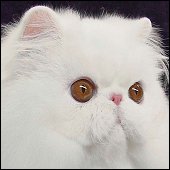
The Persian is the most popular breed of cat in the world - and one of the oldest. As their name suggests, Persians originate from the country that was once Persia, now Iran, in the Middle East. Its long coat was most likely a mutation which came about naturally to deal with cold weather. Originally called a Longhair the Persian first was noticed in Europe in the 1600's. It is thought that this was the first registered and shown cat breed. They were called Longhairs until the l960's in the U.S. In Britain the are still using the name Longhairs and each color variety is treated as a separate breed. The Persian cat of today is the result of crossing the Angora and the Maine Coon.
"The ideal Persian should present an impression of a heavily boned, well balanced cat with a sweet expression and soft, round lines. The large round eyes set wide apart in a large round head contribute to the overall look and expression. The long thick coat softens the lines of the cat and accentuates the roundness in appearance."
The Cat Fanciers Association Breed Statement
Medium to large in size is what to look for in a Persian cat. The body is stocky and wide sitting low on its legs. The legs are heavily boned, short, heavy and straight. The coat is very thick and can be as much a 6 inches long. It is double very heavy and lively. This cat requires a great deal of grooming. Daily combing or brushing with a metal toothed comb or a natural bristle brush or a brush with wires is necessary. This cat sheds year round and dead hair must be combed or brushed out daily to avoid hairballs and matting.
Tips on cleaning persian kitty ears :
Clean ears with a cotton ball or Q-Tip, but only clean out what you can see! Never enter the ear canal, leave that to the vet! Do ears after the bath. Be careful not to allow water from the bath into the ears, and cautiously around the mouth and nose not to drown your Persian kitty.
The color varieties in Britain each have their own standards where as in the United States all Persians, regardless of color, must vie to the same exact standards. This makes breeding difficult in that producing a silver Persian with the same head type and ears as most of the other color varieties is not easy. Persians are divided by color and then separated again into divisions into which most of the colors appear. The divisions incorporate the solid, shaded silvers, shaded goldens, cameos, and chinchillas.
Eyes in Persians:
Yes they water and even in a rust color in some localities! It is because of the breeding of extremeness. Please wash your Persian face daily and cautiously. Select a routine time to clean the face and groom the kitten. Don't allow the eyes to become infected by not cleaning them regularly. I also have an article on the grooming page to help with eye stains and cleaning them. I suggest a boric acid wash each day esp on the bi-color persian faces. We mix this 1 tablespoon of boric acid powder to 12 oz of boiling water. Keep this container sealed and apply on a makeup pad to clean the face, each wipe actually cleans even more. Then if the stain isn't washing off, apply some eye and wound powder to the fur around the bottom of the eye.
Also seen are smoke's and tabby tortoiseshell and particular or bicolor.. There are also shaded versions of the solid colors. Eyes must be copper with the exception of the silvers that have a blue green eye color and the goldens have green to hazel eyes. The Himalayan is the newest division in most cat associations. The Persian cats that are lilac point, blue point. chocolate point, seal point, red point, tortie point and lynx point are considered Himalayan. These all must have blue eyes.
 The Persian cat is a very lovable animal who is calm, and gentle. He loves to be petted and shown a lot of attention. But Persian also can take care of itself without too much entertaining by humans.
Subscribe to:
Posts (Atom)